Table of Contents
Acne can clear and still leave a reminder behind: small depressions and a surface that no longer feels smooth. At Chameleon Spa & Wellness in Fayetteville, TN, uneven texture from old breakouts is one of the most common concerns patients bring to a consultation.
If you have been researching microneedling for acne scars Fayetteville TN providers offer, here is the short version: it can help, within limits, and it works gradually.
Can microneedling improve the look of acne scars?
Microneedling can soften the look of depressed acne scars and even out surface texture for many patients. It works by prompting the skin to build new collagen in areas where healing left a dip. Improvement develops across a series of sessions, and the amount of change depends on scar type and depth.
Can Microneedling Improve Acne Scars and Skin Texture?
Microneedling for acne scars can improve the look of depressed scarring for many patients, with change measured in smoothness rather than erasure. Improved texture means a flatter surface that catches light evenly, so old dips stop reading as shadows. Honest acne scar reduction happens across a series of sessions, and how much a person sees depends on scar type and depth. Microneedling for skin texture is cumulative, not a single corrective appointment.
Why Acne Scars Change Your Skin Texture in the First Place
Atrophic scarring forms when inflammation damages collagen and the skin heals with a deficit, leaving a depression instead of a smooth surface. These fall into three shapes: rolling scars, which look soft and wavy; boxcar scars, which have sharper edges and sit shallow or deep; and ice pick scars, which are narrow and reach well below the surface.
Texture and tone are separate problems. The dark or pink marks left after a pimple are post-inflammatory hyperpigmentation or erythema, and those usually fade on their own. Microneedling for uneven skin texture addresses the dent, not the discoloration.
How Microneedling Works on Scarred Skin
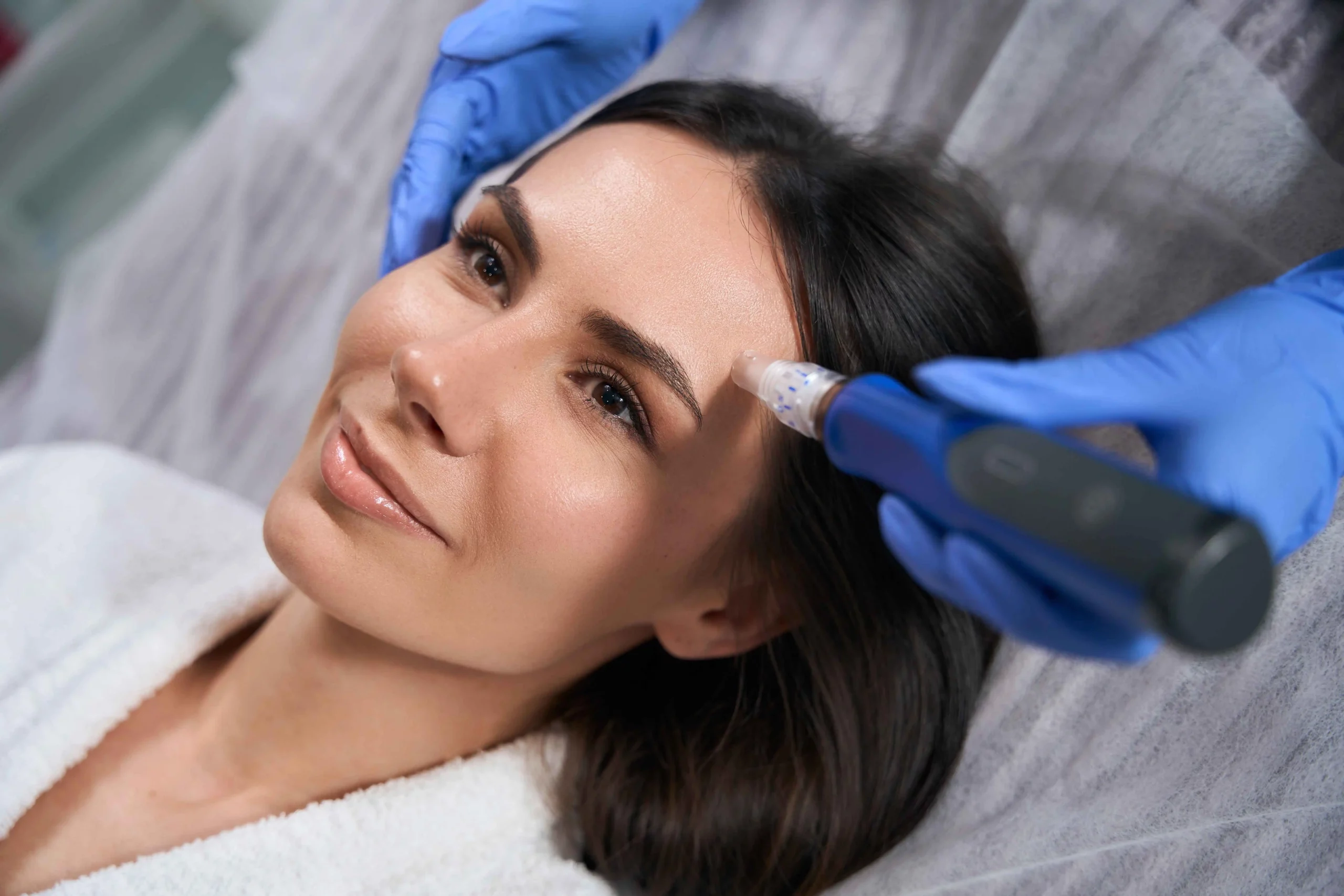
A microneedling treatment uses fine needles to create controlled micro-channels in the skin, triggering the body’s repair response. That response stimulates new collagen and elastin, gradually building up the floor of a depressed scar so it sits closer to the surrounding skin. The needles also help release the fibrous tethering that pulls rolling scars downward, one reason that scar type responds well. Treatments here use the Rejuvapen device, with topical anesthetic applied beforehand for comfort.
Which Acne Scars Respond Best to Microneedling
Not every scar behaves the same way, so microneedling acne scars outcomes depend on shape and depth.
- Best responders: rolling and shallow boxcar scars, often across the cheeks and temples.
- Partial responders: deeper boxcar scars, which usually soften but rarely flatten completely.
- Limited responders: ice pick scars, which are narrow and deep and often need a different technique.
- Not the right target: raised or keloid scarring, and active inflammatory acne, both of which need evaluation first.
Microneedling for pitted acne scars works best as part of a wider acne scar treatment plan, not as a single answer for every mark.
What Adding PRP Does, and What It Does Not
PRP microneedling for acne scars adds a second step: a small blood draw, processed in a centrifuge to concentrate the platelets, then applied to freshly treated skin. The reasoning is that the micro-channels are still open, so the concentrated platelets reach the layer where repair is already underway. Research suggests it may support healing and the collagen response after microneedling, with results varying between patients.
What it does not come with is settled proof. PRP is used off-label for aesthetic and scar work; the evidence base is still developing, and it is not a standard part of every microneedling plan. Whether to add it is a consultation conversation.
How Many Sessions It Takes and When Texture Starts to Change
Most patients need a series of acne scar microneedling sessions spaced several weeks apart, with the number set during an in-person assessment. Early microneedling results show up as smoother surface quality and better makeup wear before any visible change in scar depth. Collagen remodeling continues for months after the final session, so the fair point to judge improvement sits later than people expect.
Who Is a Good Candidate, and Who Should Wait
Good candidates have acne that is controlled or resolved, textural rather than raised scarring, and realistic expectations. Reasons to pause and be assessed first include active breakouts, recent isotretinoin use, a history of keloid formation, cold sores, pregnancy, and certain medications.
Skin tone is part of the assessment. Providers use the Fitzpatrick skin type scale to judge candidacy, and because microneedling is mechanical rather than light-based, it is often considered across a wide range of skin tones. Candidacy is still individual, which is why our team maps scar types in person.
How to Protect the Texture You Gain
Daily broad-spectrum sunscreen does more for long-term results than any product bought afterward, since UV exposure slows collagen remodeling and darkens healing marks. Ongoing acne control belongs in the plan too, because new lesions create new scars.
For the first several days, keep it simple: gentle cleansing, no retinoids or acid exfoliants until your provider clears them, and hands off the skin. Mild redness, light swelling, and occasional bruising are common early and settle on their own.
Common Questions About Microneedling for Acne Scars
Does it hurt? Most patients describe it as tolerable. Topical numbing cream is applied first, and the sensation is compared to light sandpaper.
Can an at-home derma roller do the same thing? No. Depth, needle quality, and sterility separate a clinical treatment from a device that can worsen scarring.
Will it help the dark marks? Indirectly at best. Texture is the target; discoloration responds better to other options.
How does it compare to peels and lasers? Chemical peels work on the surface for texture and discoloration, and laser treatments such as AdvaTx are used for redness and tone. Scar work often combines approaches.
Ready to See What Your Skin Can Do
Microneedling for acne scars can soften depressed scarring and even out skin texture for many patients, provided the expectation is gradual improvement, not a clean slate. The sensible next step is an in-person look at your scar types, since that determines the plan.
Ready to improve the appearance of acne scars and uneven skin texture? Schedule a consultation with Chameleon Spa & Wellness in Fayetteville, TN, to explore personalized microneedling options.